
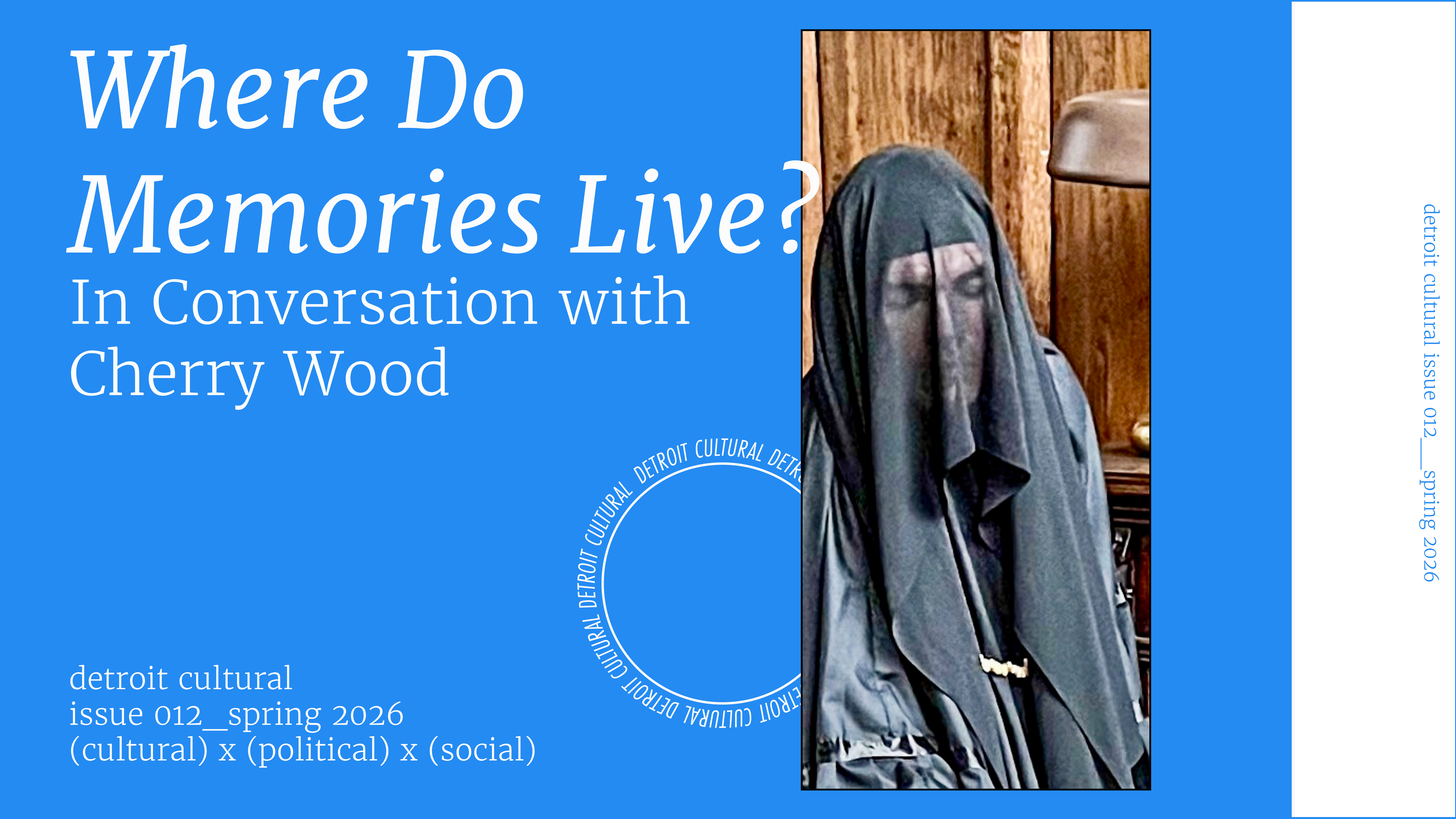
Cherry Wood is a Detroit-based artist and educator who works across disciplines such as sculpture, photography, and performance. Originally from Honduras, Wood studied art in Windsor, Canada before moving to Detroit. His work has been featured in the Venice International Performance Art Week, Museum London, and the Detroit Institute of Arts, as well as being the recipient of support from the Andy Warhol Foundation, the National Association of Latino Arts and Cultures, and the Foundation for Contemporary Arts. He is currently enrolled in a Master of Fine Arts program as a Gilbert Fellow in the Photography Department at Cranbrook Academy of Art.
DC: When you began your artistic practice what did your earliest work look like? What were the disciplines and media you were interested in?
I want to start by saying that I didn’t have an art background before I started art school, and so I had an open mind about trying things the first time I got to school, and so I wasn’t afraid of trying painting, or sculpture, or photography and mixed-media. I began working with a series of sculptures made out of gesso, and the idea behind that is that I wanted to talk about issues that had affected me up to that point—I mean they still do now but I think to a lesser degree—so back then around 2008, 2010 I was working with issues of immigration, sexuality, identity, and language. I was working with these gesso sculptures and I was trying to almost objectify the banana or the ice cream cone, or a popcorn kernel. These are large sculptures that you wear on your back as backpacks, and so I did a lot of performances and photoshoots.
DC: And this is in Windsor?
Yes this was in Windsor, Canada in my Master’s program. I went to bars, restaurants, galleries, and festivals. I was working with a lot of students who were hired to be models. That was the first body of work that I did.
DC: What had led you to trying art at that point?
That’s a funny story because when I first moved to Canada I knew I wanted to go to school. I grew up in Honduras and I didn’t go to school, I tried to go but it never worked out, so I knew that once I got to Canada that was my first goal was to go school. But the funny thing is that my first enrollment was in Communications, and so I went and talked to my advisor and I told him that my English wasn’t very good. I knew how to read a little bit, and I knew how to write a little bit. They recommended that I look into the Art Department, because Communications required a lot of writing, a lot reading, a lot of interpretation. I didn’t even last one semester, in the first few weeks I switched to the Art program which turned out to be I guess a good idea.
DC: When you’re first then identifying as an artist, were there any artists whose practice really interested you or presented themselves as models for you?
I’m a pretty regular person so I was pretty attracted to the big names in the art world, that was kind of the first time I came across art. In art school the very first basic classes are about the big names in the art world. I’m talking about Warhol, Frida Kahlo, —
DC: Who I feel like permeates your work a little bit? Like seeing your name in the Coca-Cola logo, the first thing my brain jumps to is a Warhol reference point. I don’t know if that’s what you’re thinking about.
So for me, looking at his work and everything he did kind of influenced me a lot.
I was very fascinated by how he was so prolific, his work that he did, and how he got famous, I felt a connection with the work I was doing at the time, especially with the banana, popcorn, the ice cream sculptures.
DC: In terms of you working with sculpture and performance in relation to one another, was there an artist who had led you in that direction of merging those two disciplines? For someone who is starting an art practice that feels kind of advanced me to.
I have never thought of myself as a performance artist, the title seems to me too much of a big title, but at the time I was trying to figure out how to make these images and objects move, or how to make these ideas I had have an extra layer of communication, rather than just a static photograph or a sculpture. I was trying to figure out how do I make them move, and how do I bring them to life in a way.
So I just began applying for festivals across Canada, and I just began experimenting and being myself, and not having experience with the format, it was exhilarating because I didn’t know what I was doing. I think my inspiration at the time for performance art was just being surrounded by other performance artists around me. That was the original idea, “how do I bring my 2D or 3D objects to life?”
DC: It seems to me that much of your practice deals with the relationship between images and text, and also the relationship between how those things affect memory. There’s also a lot of references to dreams and the unreliability of memory. How did those issues come to be important to your practice?
That has just been a very recent development in my practice, and so I’m just still exploring how those things work in my work. But just as everybody else, I’ve always had very vivid dreams, I’ve always had very clear visions and premonitions. I’ve had a very spiritual upbringing in my art practice—and obviously I grew up Catholic in Honduras—but aside from that, when I started doing performance art I began to expand a lot into spirituality. So I was being trained or being guided by a lot of spiritual guides from Mexico. I work along side shamans in Mexico as well, and I think that experience has brought a little more tangibility about feelings, memories, and dreams, that I’m just beginning to understand how does a memory work in terms of art practice. Again, how do I make this memory come alive?
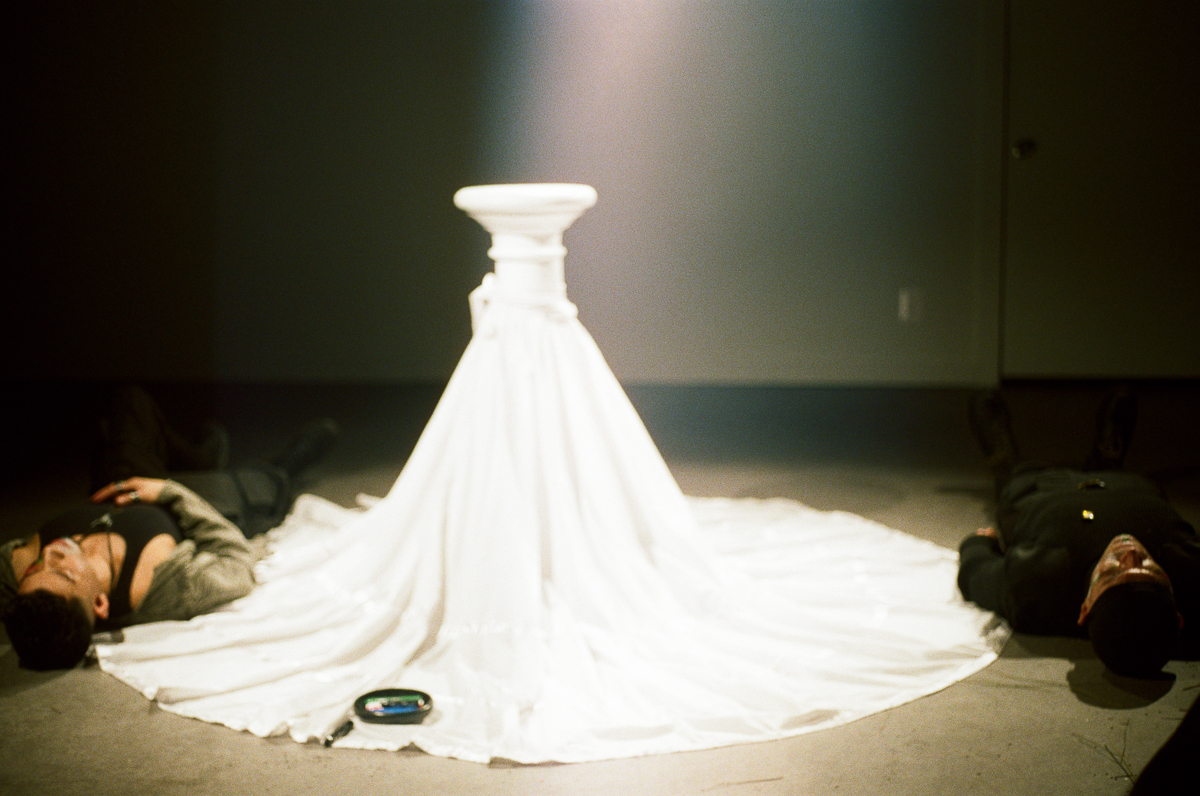
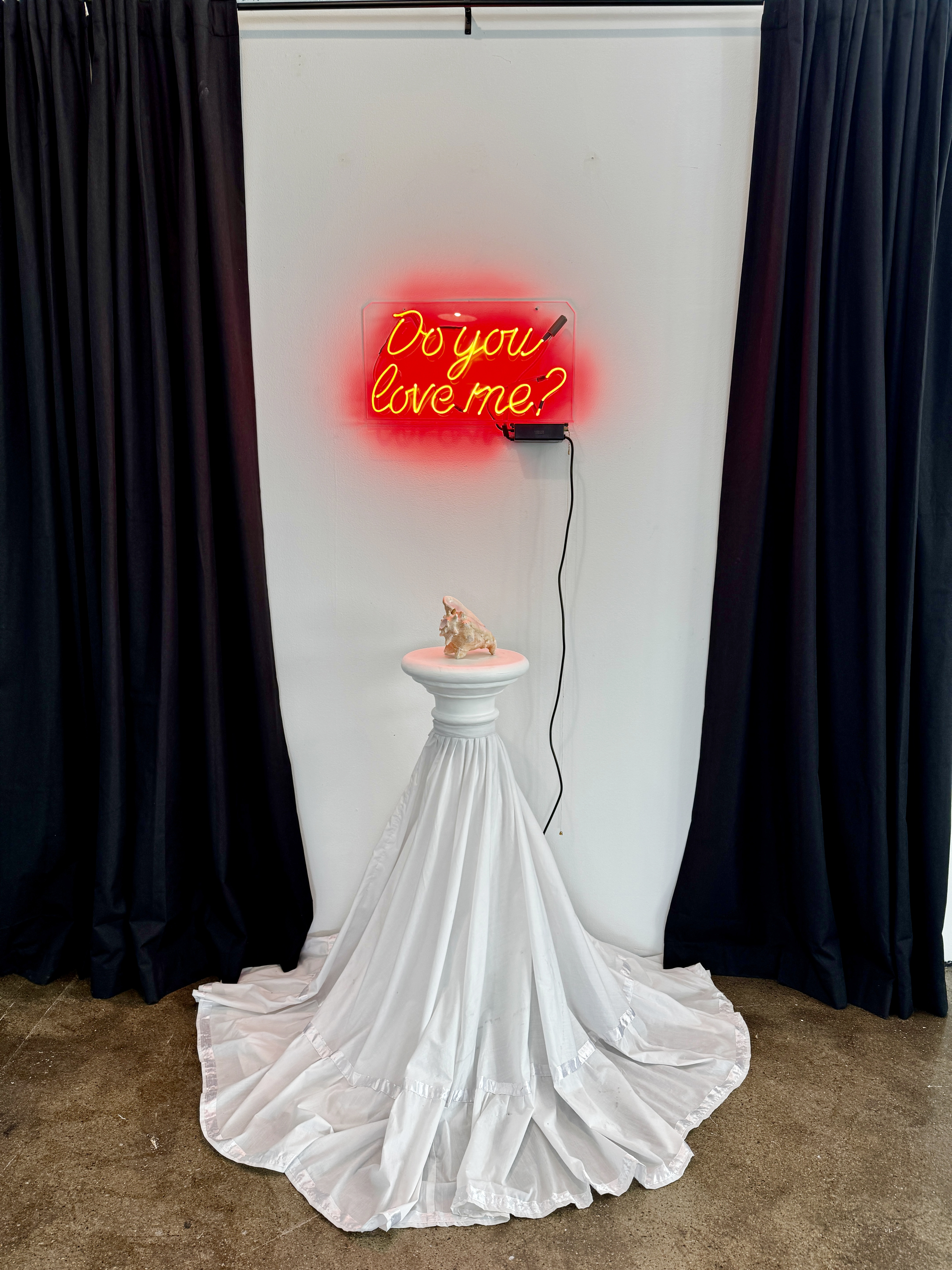
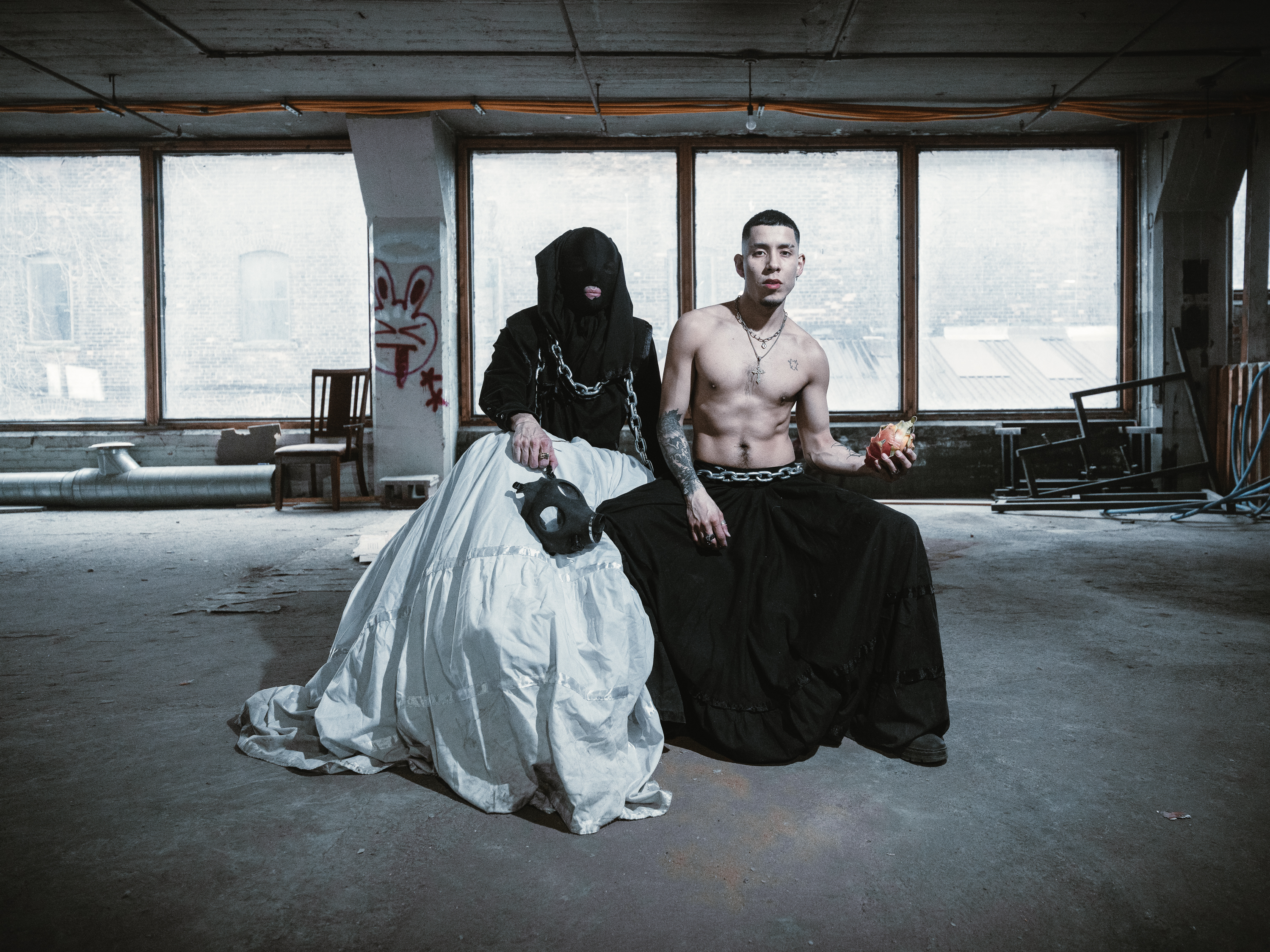
For example right now I am working from a single memory from when I was young. I have been working alongside Kiwi Barranco, who is a friend, collaborator and co-creator of this new series, and so we are just experimenting with this single memory and recreating that moment with each other and seeing where that takes it. And I’m actually understanding how if I use an object, for example like a conch, to play in a performance or in a photo, then what I’m doing is trying to figure out how do I bring whatever happens in the performance into the object, and how does the object hold the memory as well.To me it’s interesting because it makes me wonder where does memory live?
DC: You mention that phrase, that the photograph is the trace of an action.
Whenever there is an action, the body leaves a trace, and so what does that trace say or where does it travel? What holds it together? That’s where I’m at right now— how a trace of a memory can be transformed or transferred into an object. I’m curious about how if memory lives in the brain, then they are always there, but as an artist I feel like I need to bring them into an object or movement so I can make it sensible.
Sometimes I find myself trying to bring those memories back, but then don’t come back as easily as I want them to. I feel like memory is always there but at the same time it really is dependent on how you bring them back. Because you cannot bring them back and feel it. Memories are always there but they are not always accessible.
For example as a kid I used to play with Tonka trucks and so whenever I see a bulldozer—I don’t know if its the tires, the engine grill or the scoop—but that’s what comes to mind immediately, it never fails. I don’t want my memory to fail when I want to call up a memory, but it’s hard.
DC: Do you think of your art practice as something that is inherently political or do you think it is possible for it to be separate from politics?
I think just by being who I am, I’m a political subject, for whatever reason, but I don’t think of my work as political work. I think more of myself as a political being, not in the sense of me as a politician, but in the sense of like when you walk into a space and you start talking with an accent and people don’t understand you, or you say your name, the color of your skin, all of those things to me are part of the political world.
I don’t think of my work as like a tool or a testament of times or whatever you want to call it. I feel like my work is me going through the process of recording all of the events that I have gone through. I consider myself a shy person, but for some reason I am able to share with my work.