
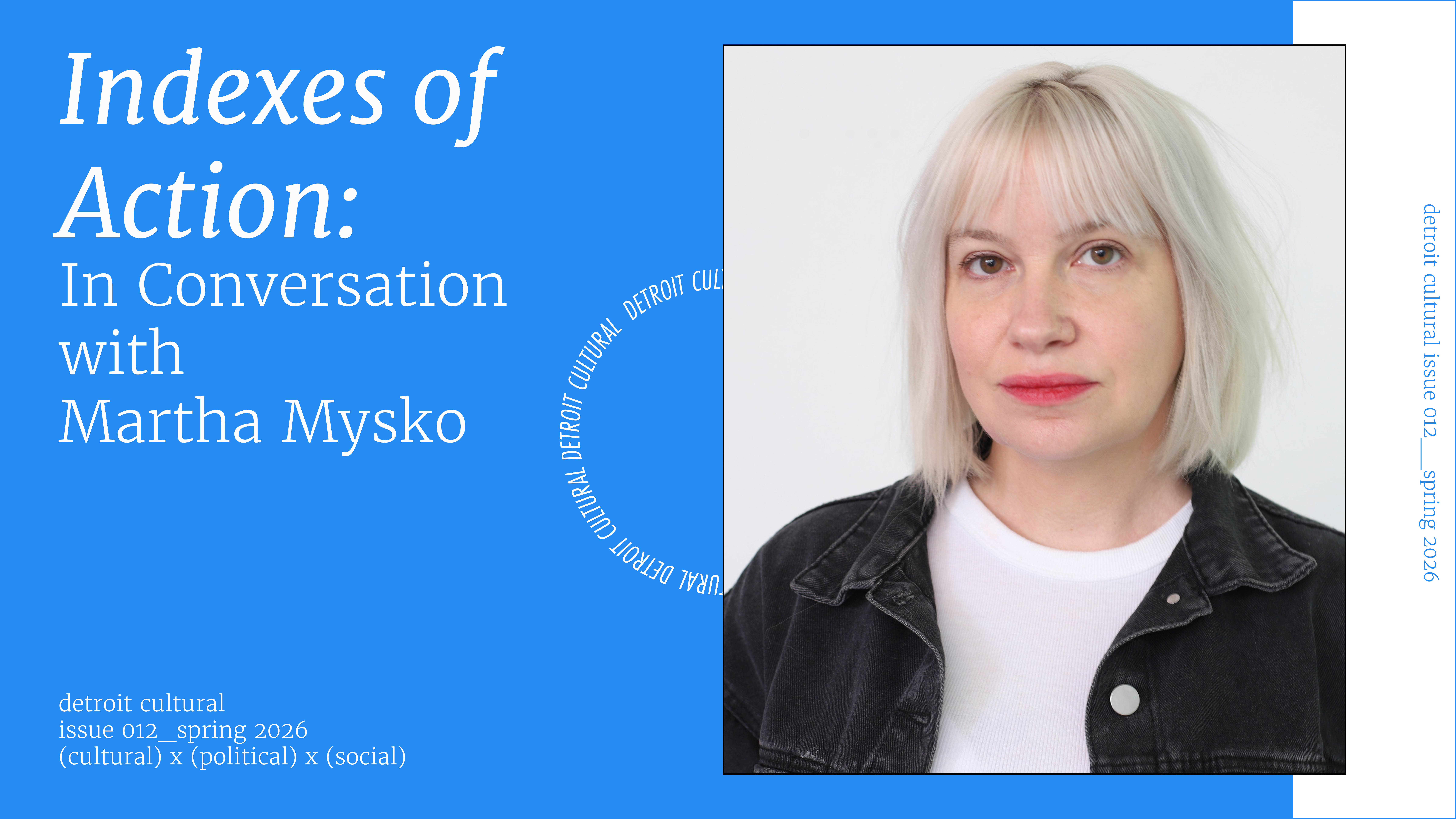
Martha Mysko is a Detroit-based artist and educator whose work moves across disciplines such as painting, installation, and digital art, eliding easy categorical classification. Her first solo museum exhibition Retail Therapy is on view now at the Museum of Contemporary Art Detroit until June 21, 2026. Her work has been featured in solo and group exhibitions at Cranbrook Art Museum, Wasserman Projects, Belle Isle Viewing Room, and others. Mysko is the Artist in Residence and Co-Head of Painting at the Cranbrook Academy of Art.
DC: Could you talk a little bit about your new exhibition at MOCAD Retail Therapy? I’m curious about the relationship between the work in the exhibition and the title of the exhibition. I’m also curious what you’re most excited about with this new exhibition.
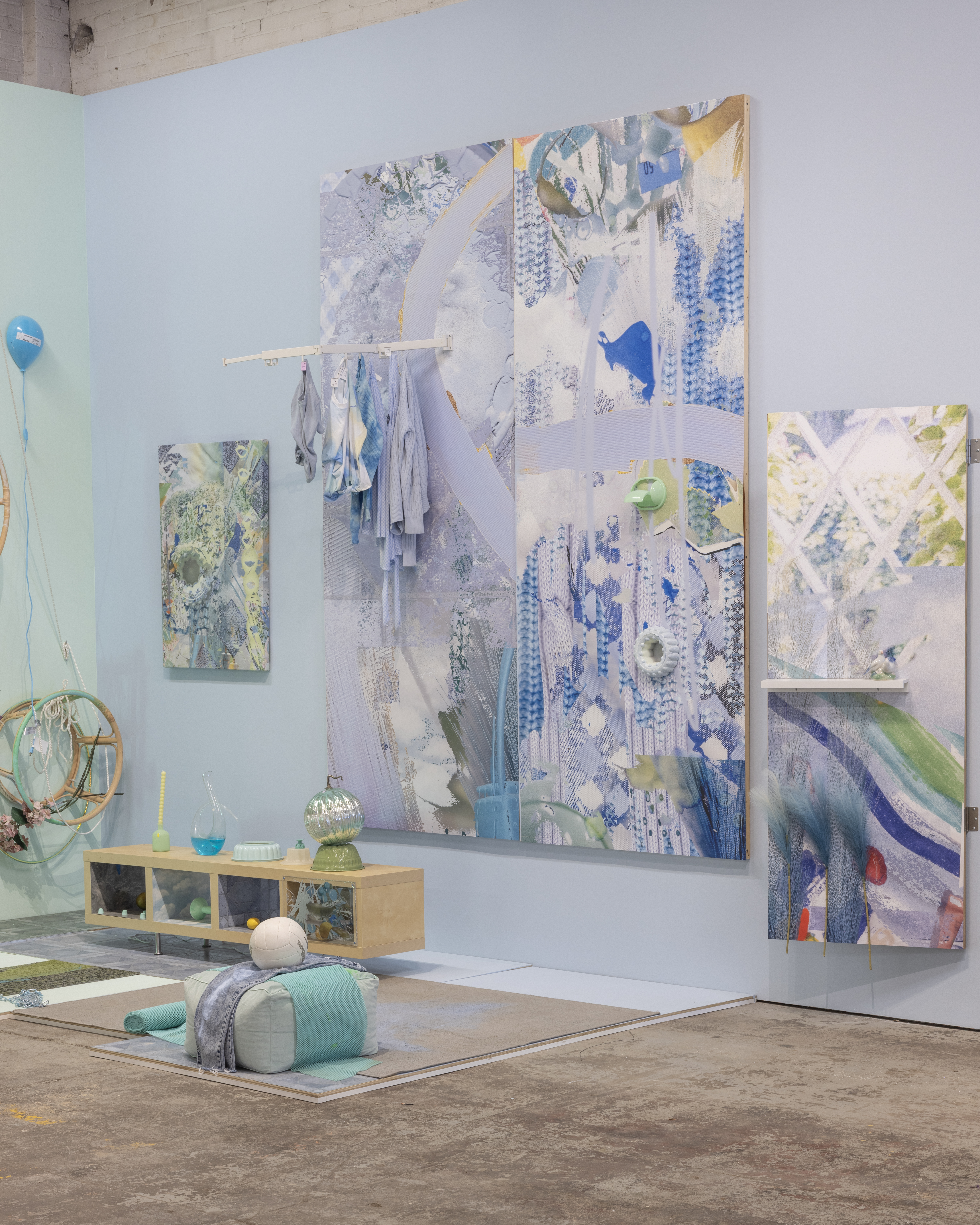
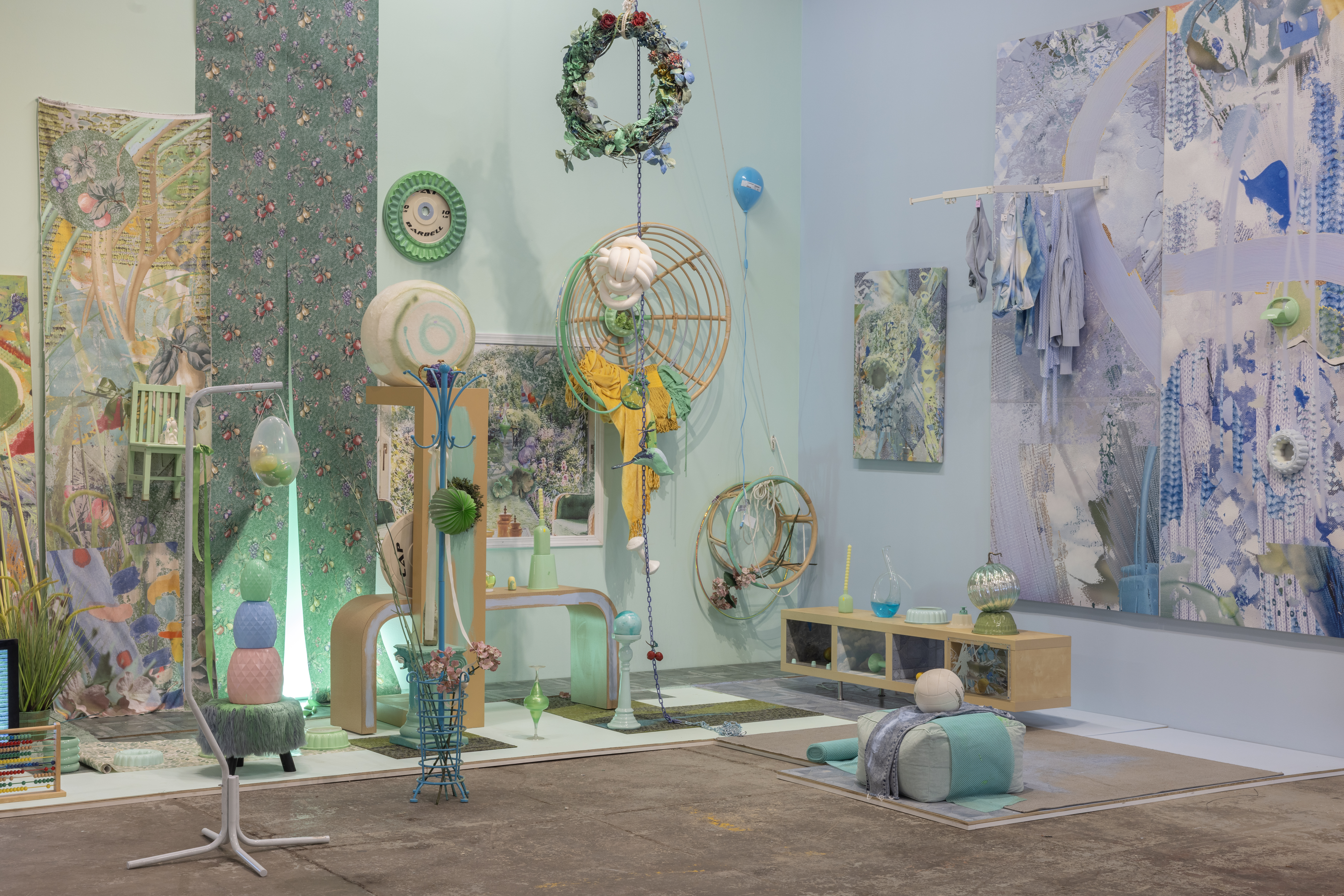
The exhibition features two large scale installations and a two-dimensional wall piece. The two installations both began with a specific color palette and mood in mind, and I used one object as a starting point. For both installations, I began with a search on Ebay for bed sheets that fit the palette and had an “abstract painting” motif. The works were built from there after purchasing the sheets, through a process of scanning, photographing, printing, (rephotographing or re scanning and reprinting numerous times over), as well as sourcing, adding, editing, purchasing and intervening with materials and objects. There is physical manipulation, physical painting, and digital collage (or digital painting if you want to call it that) layered within both of the installations. There are elements of “chance” (finding objects at a thrift store on a particular day that suit the palette, or have a particular tactility, form, function or personal or cultural associations etc.) and some objects I search for more specifically, on Ebay and discount and online retailers.
With the installation “A Green Thought and a Blue Shade”, I was also looking at images of Helen Frankethaler’s paintings and scanned a section of her painting titled “A Green Thought in a Green Shade” as an initial move within the work. There are also scanned sections of low-res printed images of an online feature on the recent “Grey Gardens” house makeover, fractured and layered within this piece. Through this collage process the work reflects on class, taste, value, and consumerist culture.
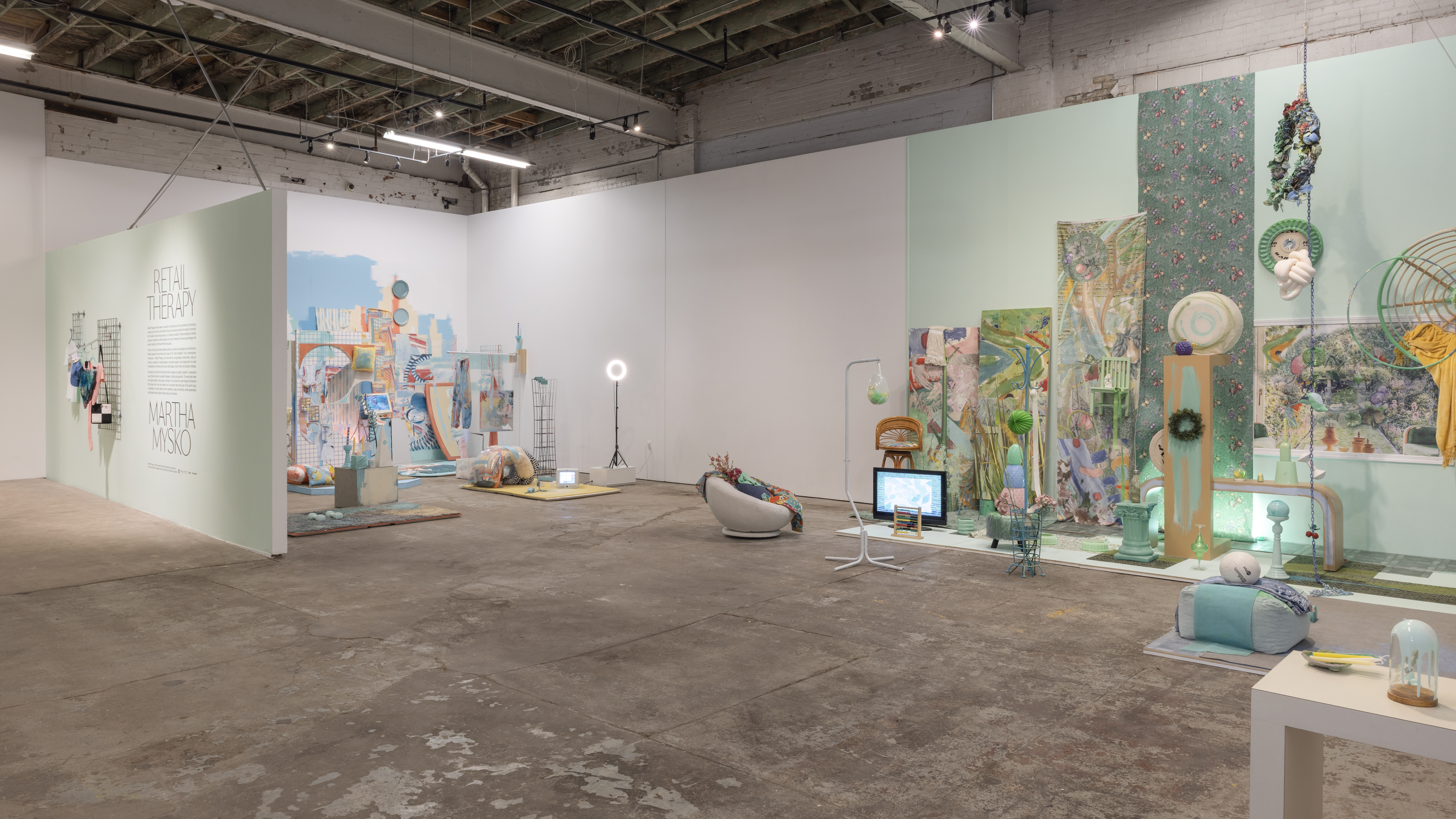
Both pieces also rely on a heavy reuse of materials, objects, and furniture from prior installations and artworks of mine. Most objects in each installation become part of the printed material, which creates repetition and fluidity.
The wall piece, “My Monet 2” also began with a bedsheet (a Monet-inspired print), chanced on at a thrift store. The work itself is a digital piece made from scans, photographs, and digital manipulation of another work of mine titled “My Monet”. This piece, I think, is a good example of the generative nature of my practice and how I am creating images fluidly between physical and digital processes. I am also interested in the familiarity of modernist painting that often comes not from the artworks or images themselves, but through their reproductions on mass produced goods like clothing, umbrellas, and bedsheets.
I arrived at the title “Retail Therapy” because “shopping” has been such a central aspect of my process, and I am also very interested in marketing strategies such as color trend forecasting. I look at visual merchandising, and store displays and also images of Brancusi’s studio for inspiration. I like finding modernist and avant-garde aesthetics within disposable consumerist culture. I love to look at long rows of pillows or racks of t-shirts organized in a rainbow of colors at discount home stores and thrift stores, and I feel a strong sense of possibility. One innocuous object can kickstart an entire new body of work.
What I am most excited about is showing this installation-based work! It has been a while since I have shown the larger scale installation work in Detroit and I am so happy for this opportunity.
DC: This exhibition involves a restating of your immersive installation Vanity Room. What was the process of the initial creation of the work, and how did you approach the task of re-staging of it in a different space?
The installation when I initially built it in my studio was about the same scale that it is in this exhibition, but was then adapted for a room about half the size when it was exhibited in New York last year at the Spring Break Art Fair. Reconfiguring it back to the larger scale here within an entirely different architectural space really mirrors how I think about site, as well as compression and expansion within my process and how I attempt to achieve both simultaneously. The work went from large to small, now back to large and adapts and changes based on the space and architecture of the room. I like for my work to reveal indexes of action and because the work has so many elements from prior installations, it is very layered with use. The work feels very different, more like stage and also more porous.
DC: I think one of the most notable aspects of your works when I first encountered them is how slippery they are in terms of evading
classification (2D vs 3D, material vs digital). How did you come to make work that blends so many different disciplines like painting,
assemblage, installation, etc.?
When I was younger and all through undergrad I took a more traditional approach of painting on canvas. When I moved to New York after I graduated, I was exposed to so much new art and became very interested in installation. Later, in grad school, learning more specifically about artists who take an expanded approach to painting and the rich history of painting and sculpture hybrid work opened up so many possibilities for me. I remember very distinctly the first time I projected a photo onto a three dimensional installation. There was so much discovery, and something clicked. Working digitally allows, at times, for a different kind of speed, and seeing materiality and color shift from the screen to three dimensional space, and then back again and again is exciting for me. I enjoy the tension between raw physicality and the glossiness of a screen.
DC: How has teaching shaped your practice?
Being so actively and regularly engaged in conversations around contemporary art, and thinking critically about work is inspiring. I am fortunate to have a community of ambitious artist students to be around in the day to day. It keeps me critically engaged, thinking about possibilities for the future, and new ways to consider the ever evoloving dialogues between a studio practice and the world we exist in.
DC: Do you believe there are social/political responsibilities to art making and if so what is the most pressing one for you in this current
moment?
I don’t think there are any rules, for me personally, I want to make art that is both critical but also liberated and accessible, work that reflects contemporary culture, and reflects on my own role within capitalism and consumerist culture. It’s about being aware and also being free.
Wonderful, thought provoking work. Congratulations, Martha.