
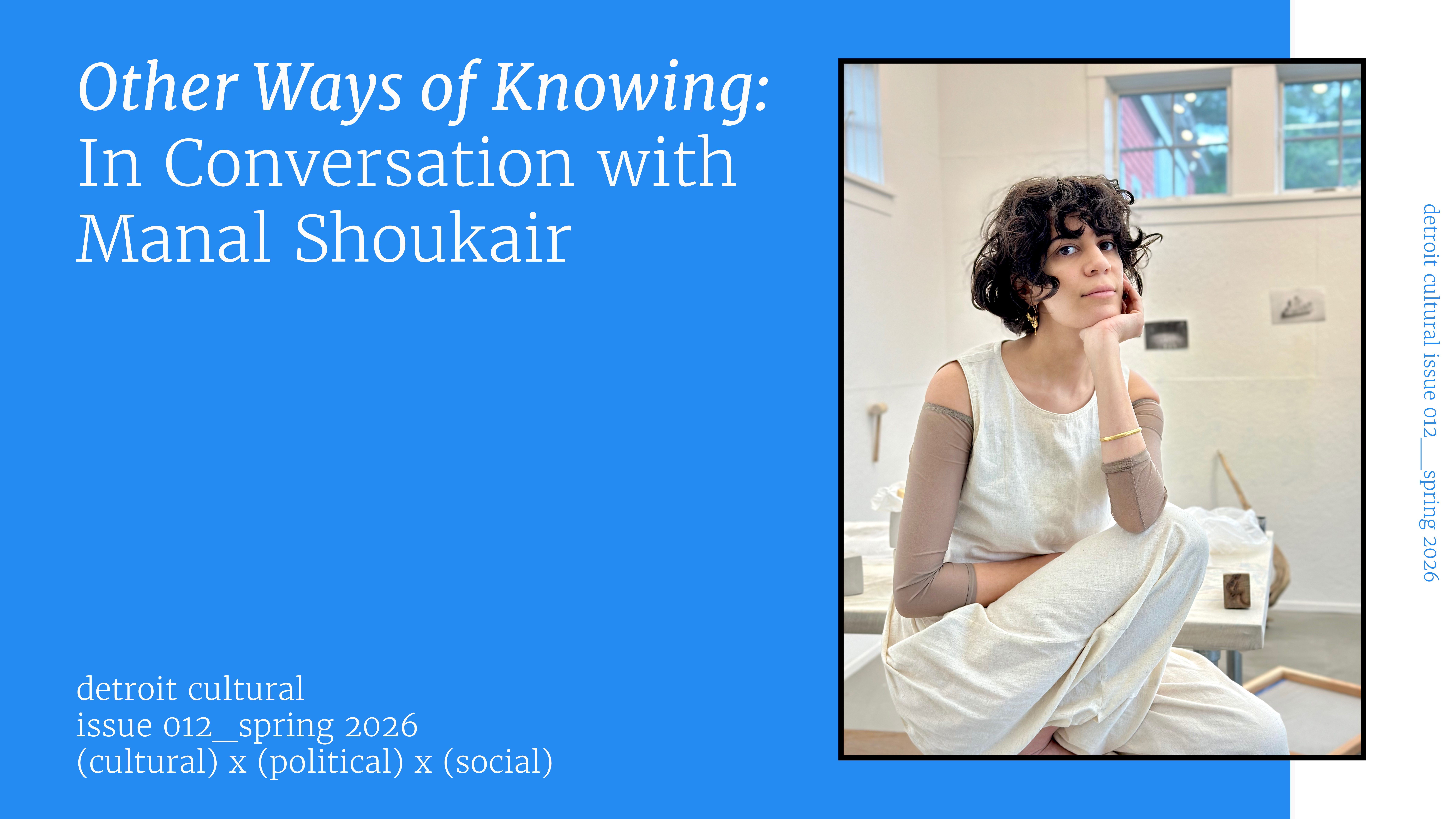
Manal Shoukair is a Detroit based, Lebanese artist whose work in video performance, sculpture, and site-specific installations explore the complex intersectionality of her multicultural identity, Islamic spirituality, and contemporary femininity. Manal’s work has been featured in art publications, including Hyperallergic, Sculpture Magazine, the Detroit Metro Times, Fad Magazine and Detroit Art Review. Shoukair has been awarded the Master’s Thesis Grant from VCU, the Gilda Award from the Kresge Foundation and is a Fellow recipient at the Skowhegan School of Painting & Sculpture and MacDowell.
DC: I’d like to begin on a local level by asking how living and working in Detroit has shaped your practice? I’m curious both in terms of your studies at CCS and how the Detroit arts community has possibly shaped your work, but also in terms of if living in Detroit has shaped any of your areas of inquiry in your practice?
Living and working in Detroit has always felt a bit like inhabiting a threshold. Never entirely one thing, never entirely another. I grew up mostly in the suburbs. My parents immigrated to America from Lebanon, holding on to what I believed was love, crossing large bodies of water to start a new life in a foreign land. Home was always shaped in the shadow of somewhere else. Lebanon was present in stories, in language, in the way things were done at home but slipped in and out of daily use. It was a foreign soil that promised the root of the self. There was always this idea of return, even if it wasn’t immediate or defined. That feeling never really settled, and over time it became a beginning marker to my work and how I orient myself. I think I began looking for a language for that feeling during my undergraduate years at the College for Creative Studies. I was studying sculpture, surrounded by faculty and peers, who really shifted how I thought about making. Materials no longer held as fixed forms; they began to register as gestures, carrying timelines and memory. Making became less about producing an object and more about staying with something as it unfolds. I don’t think that quiet intensity in my practice would have formed without that particular community. There was rigor if you wanted it, but it didn’t feel separate from care.
My relationships built there remain embedded in how I work, and I hold them with a lot of gratitude. Detroit, outside of those walls, has been deeply reflective. It embraces a lot at once. Industry, abandonment, rebuilding, shifts overlapping in ways that don’t always align. You feel those layers as you move through them. That kind of dissonance feels familiar. Moving between cultures, between languages, between different ways of understanding where you belong. It never really resolves, it just builds. My installations might stay with that. To hold the tension as a condition. To let it be encountered through different ways of sensing, at different thresholds. Something you move through, in whatever way you can, rather than something that is explained.
DC: Could you tell us about the installation that you researched and developed during your 2024 residency at McDowell?
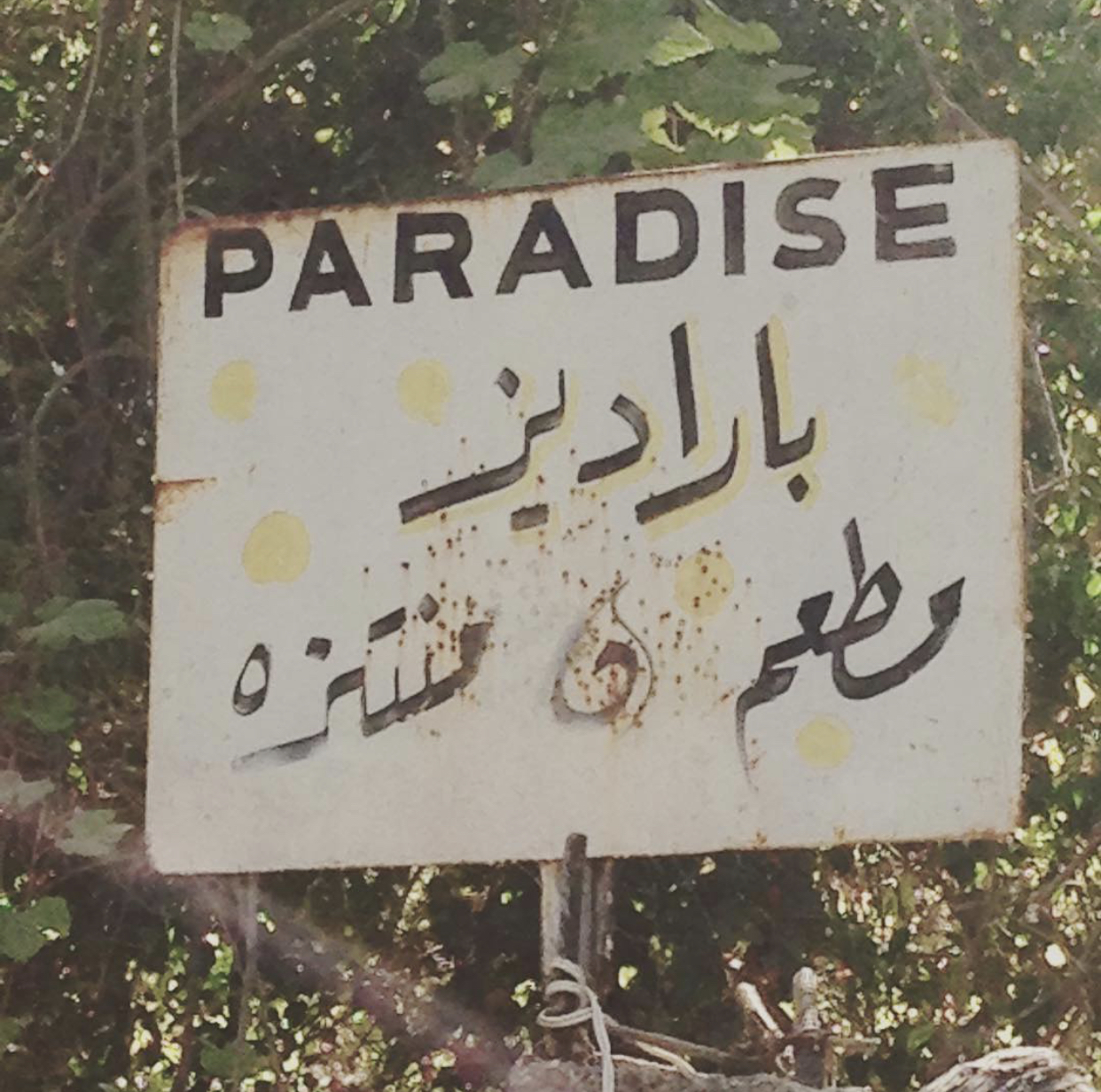
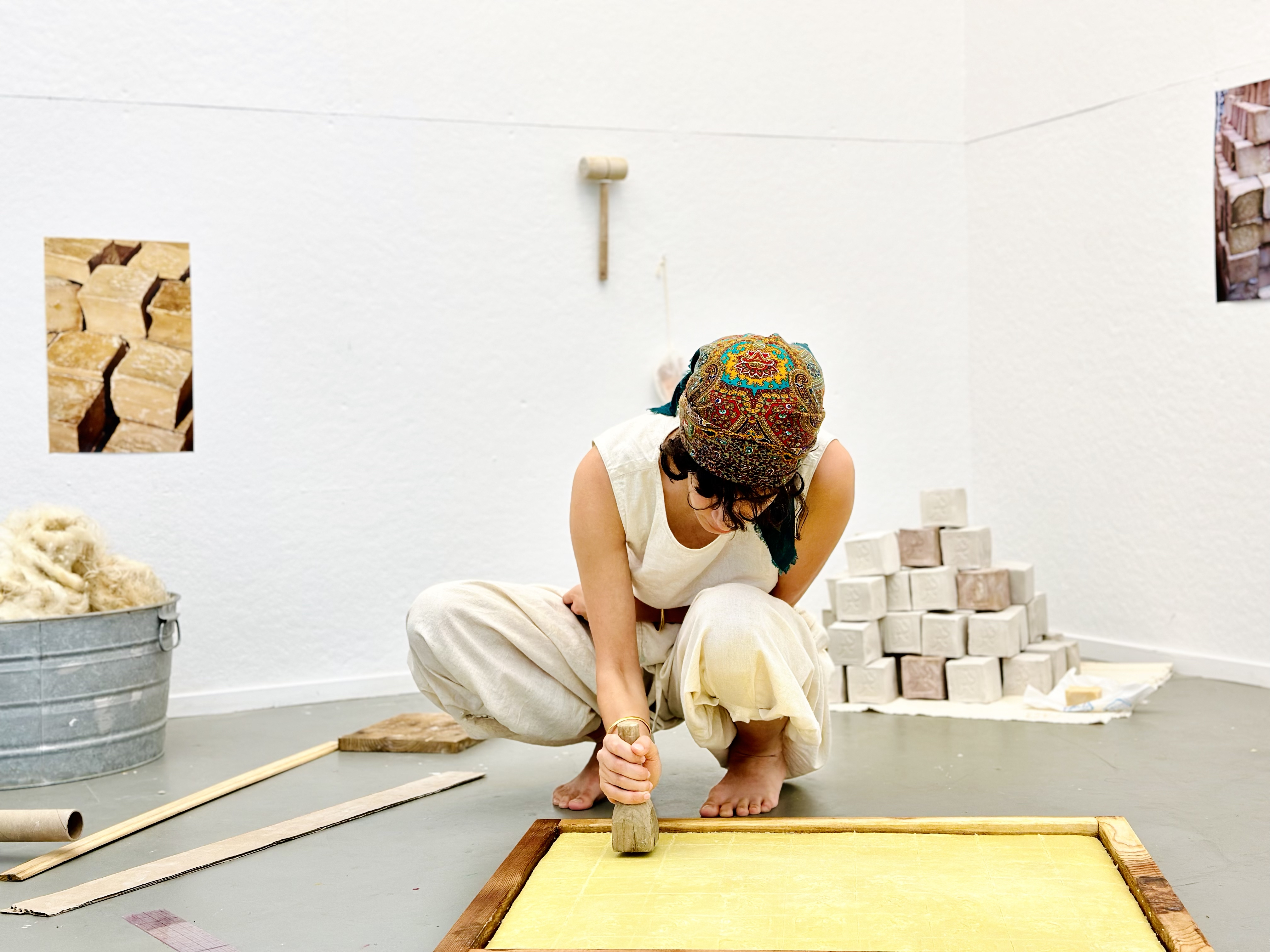
I began working with traditional olive oil soap making during my residency at MacDowell. It’s a material I’ve known since childhood. something my mother used, and her mother before her. It’s always been part of daily life in Lebanon and across the SWANA region. Square blocks of soap formed through water, lye, and olive oil, cured on expanding workshop floors, pressed with a carved stamp, with movements carried through generations. From there, I started looking more closely at its histories in Aleppo, Tripoli, and Nablus, and the way that lineage continues to be destabilized and lost through occupation, war, and forced displacement of people and labor.
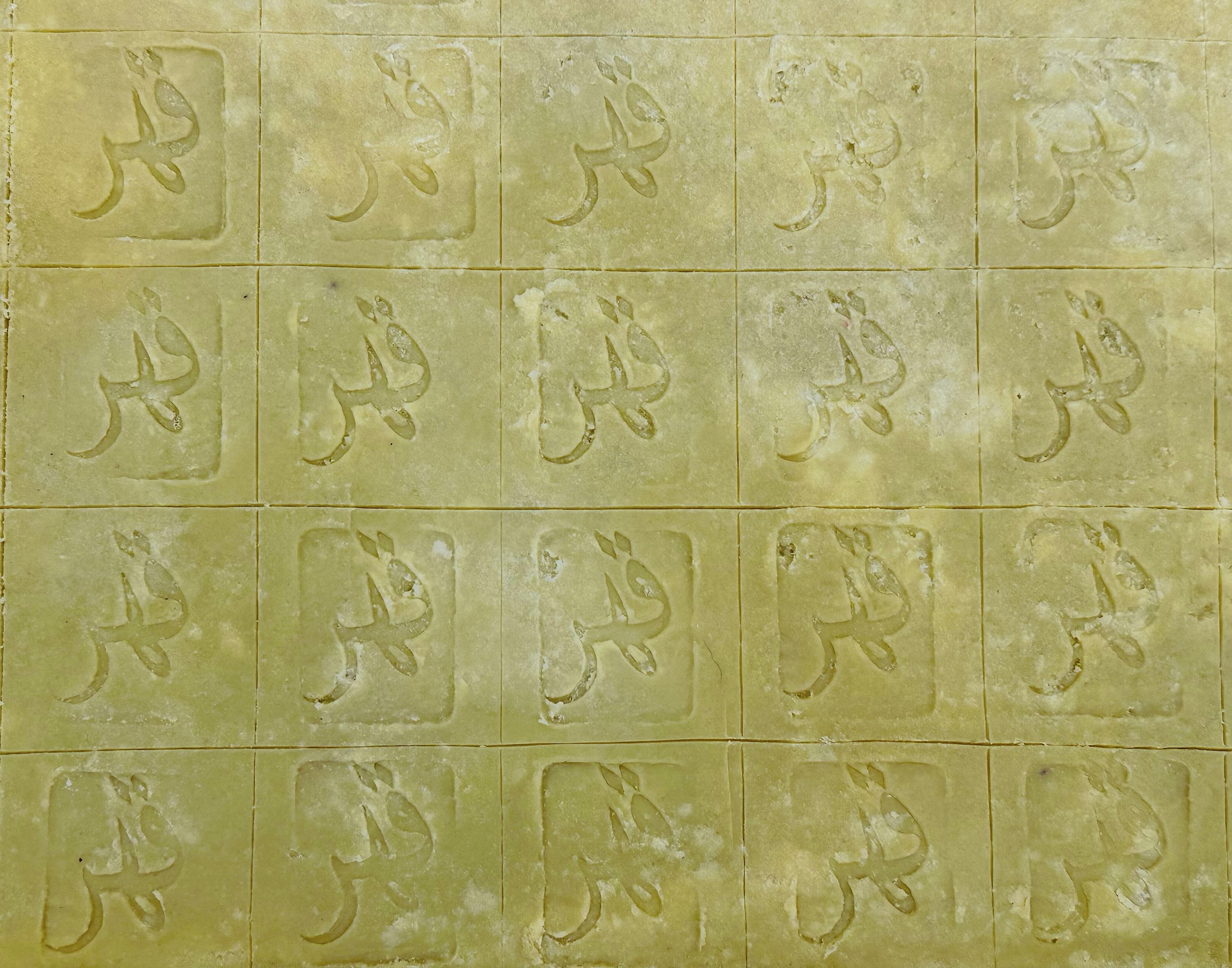
I didn’t want to approach it from a distance. I wanted to move through the process itself. To learn it slowly, through repetition and touch. I started with small batches. Hand pouring, letting it set, returning to it. At MacDowell, this expanded into a studio installation. I built a cedar frame on the studio floor and poured the soap directly into it, then let it cure in the space. The scent stayed in the room, studio conversations overlapped, time started to feel like part of the material. As it cured, I stamped the surface with the arabic word qahr (قهر). It’s a word that doesn’t translate cleanly. It’s often described as anger or sadness, but it holds something heavier. Something that builds over time, shaped by oppression and injustice, settling in the body. It can feel like something that washes over you. At the same time, qahr is rooted in al Qahhār. “The one who prevails over all creation.” I don’t make that connection explicit in the work, but it’s there for me. The weight of what’s carried, alongside something that exceeds it. I repeat the gesture, pushing the word into the surface, watching how it held or shifted, how it could fade as the material continued to change. Each impression held that tension. The surface could carry the mark, but it could also lose it. And that’s something I kept thinking about. Soap is meant to be used. It dissolves. It disappears through care. And the word qahr, pressed into something that washes away, starts to shift. It’s not fixed. It moves. It can be worn down, carried, released. The work stays with that cycle, between marking and washing, between holding and release. My research at MacDowell is part of an ongoing installation series that moves toward a larger, communal reperformance of soap making. A way of returning to the practice together.
DC: How does research fit into your practice?
Research for me is intuitive, it’s more like a pull than a plan. Sometimes it’s a material I’m drawn to. Sometimes it’s a practice I’ve seen repeatedly growing up, or something I can’t quite place but keeps returning. I usually begin by moving toward that feeling and seeing where it leads. Lately, I’ve been drawn to what isn’t formally archived. Oral traditions, inherited gestures, material practices. Things I’ve encountered through family, through daily routines, through ways of doing that aren’t always written down. Research becomes a kind of listening to what is present, but also to what’s missing. What has been lost, obscured, or made harder to access. It’s not linear. I’m not moving from point A to B. It’s more about noticing patterns over time. What stays with me, what doesn’t quite settle. That accumulation starts to build its own logic. Materials follow in a similar way. I’m usually drawn to them before I fully understand why. I spend time processing and experimenting, letting them sit until they start to respond. Their narrative, weight, resistance, begins to shift how I’m thinking. But it isn’t illustrating an idea. It’s shaping it, sometimes redirecting it entirely. When I’m working site specific, the site I approach is something that already articulates memory. Not always in an obvious way, but in how it’s been used, in its architecture, in the traces left behind. I spend a good amount of time with the site before making. Sitting, noticing how a body moves walking through it, what feels open, what feels closed off. I’m not placing work into a space. I’m kind of entering into a symbiosis with it, and letting that interaction shape what the work becomes.
DC: Your work in installation often relates to themes of physical accessibility, what prompted that as an area of inquiry?
Yeah, I think it really came from noticing how space asks things of a body. Even in simple ways; doorways, stairs, narrow passages, lighting, there’s already an assumption about how you’re meant to move, where you’re meant to look, how you’re meant to orient yourself. What feels available, what doesn’t. And that experience shifts depending on who’s sensing it. I became aware of how easily a body can feel out of place without anything being explicitly denied. Nothing is saying “you can’t be here,” but something in the space still asks you to adjust. To shift your weight, your pace, your attention. It’s like access moves into recognition. Space can meet you as you are, or holds you just slightly out of reach, asking something of you in return. From there, I started thinking about my own access points, and that feeling of not quite arriving. Growing up away from my ancestral context in Lebanon, that connection wasn’t direct. It came in fragments through family, language, through things carried into the home. I started paying attention to what remained accessible, and what remained out of reach. As someone shaped by diaspora, I kept returning to that distance. What does it mean to inherit something in pieces? To feel it in your body, but not always have the language, the geography, or the continuity to locate it? Where are the access points when the archive is incomplete or when it was never built to hold you in the first place? I stay with those questions, and the installations mostly come out of that. The materials hold a lot of that tension. Surfaces that stretch but don’t fully give. Translucent layers you can see through, but not entirely. Spaces you move around rather than through directly. You become aware of how you’re entering, how you slow down, where you hesitate, where you adjust, where something feels restricted. That movement starts to feel like a way of thinking. A way of approaching something that can’t be directly accessed, but can still be felt as you navigate it.
DC: What do you see as a significant political/social responsibility of your practice?
I think a responsibility of my practice is to stay with what is difficult to hold. We’re in a cycle where violence, displacement, and erasure are constant. across regions, across media but often experienced at a distance. It’s imperative to remain in relation to that. Not reducing it to an image or a single narrative, but allowing its weight and complexity to stay present. At times, the work draws you in through something quieter. A surface, a kind of stillness that feels almost familiar. That initial pull isn’t separate from what it represents. It becomes a way of entering, of coming closer to something that might otherwise be kept at a distance. I’ve been revisiting a previous installation at the Shepherd Gallery in Detroit, where a sheer fabric was stretched across an oculus opening, holding clusters of pomegranates. From below, it read as something suspended and almost sacred in relation to the site; the light filtered through the fabric, the fruit was contained, it felt composed and aligned with the space. But over time, the work began to shift. The pomegranates softened, split open, and started to drip. The color deepened. The scent changed. Flies gathered. Juice began to stain the floor below. What was initially received as beauty became something harder to sit with; activated, decaying, and marking the space. The response to it shifted too. It asked the viewer to stay with it as it moved from one state to another. To confront what happens when something crosses from image into lived condition. When it begins to mark the space around it, rather than remain restrained within it.That experience continues to shape how I think about my work.
DC: What do you see as a significant political/social opportunity of your practice?
I think about this question in relation to how the work can embrace, engage, and challenge others, especially those who have also grown up at a distance from their own cultural context. Navigating predominantly white spaces meant removing ancestral language, rituals, and ways of being that didn’t translate into those environments. So in my practice, I’m thinking a lot about access, where it exists, where it’s fragmented, where it has to be reconstructed. There’s a social opportunity in that. In creating work that doesn’t center the dominant lens, but instead retains space for other ways of knowing, carried through the body and through inherited practices. In that sense, the work resists being flattened or translated into something more legible within whiteness or institutional expectations. I think it can create moments where others within the diaspora recognize something of themselves in it. Maybe not in a direct or literal way, but in how it feels. That recognition can be subtle, but it’s potent. It can offer a feeling of being seen, or of not being entirely alone in that distance. Maybe even an ephemeral sense of home, or a tangible one. Something unveiled within the work that feels familiar, even if it can’t be fully named. When people can feel and see themselves in relation to the work and to each other, that’s power.