
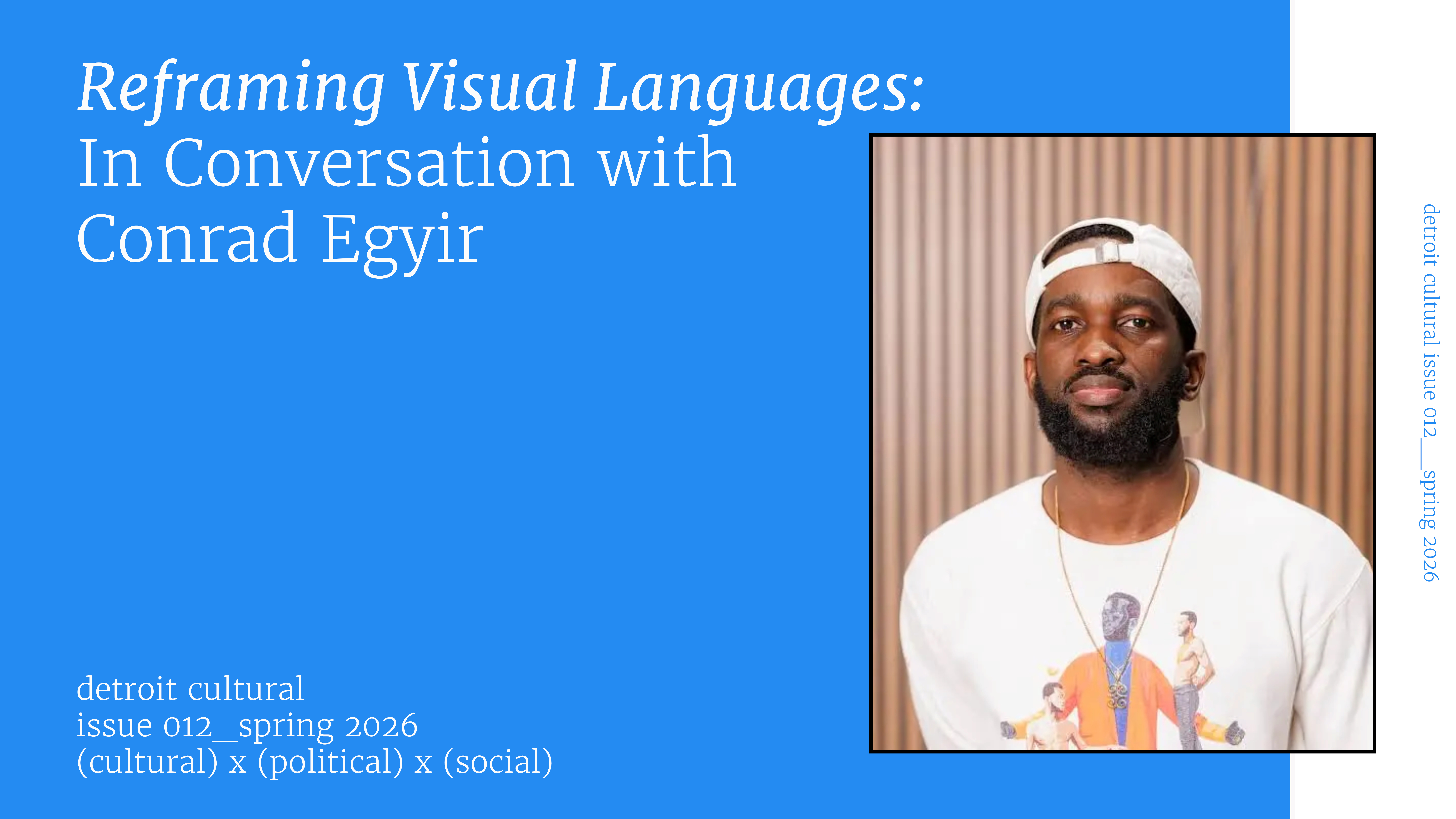
DC: I think one of the distinguishing elements of your painting is your creative and deliberate selection of shape for your canvases, referencing stamps and postcards. How did this motif come to be and what does it connote for you?
The shaped canvases grew out of my interest in systems of circulation and how images, identities, and histories move across borders. Stamps and postcards are small objects, but they carry enormous symbolic weight: they authorize movement, record distance, and mark origin. By adopting those formats, my paintings and their structural frameworks become life sized visual essays, journals, and metaphors for migration. It suggests that the portrait itself is migrating through time, geography, and culture.
DC: Many of your paintings also involve the use of text as another medium of representation. When did you begin combining images with words and what do you like about the effects it can produce?
I began combining images with words during my time at Cranbrook Academy of Arts. Text entered the work as a way of expanding what a painting could communicate beyond the visual. Portraiture already carries psychological and symbolic meaning, but language allows another layer, sometimes clarifying, sometimes complicating the image. I’m interested in the friction between what is seen and what is read. Words can function as titles embedded within the painting, as historical references, or as fragments of thought that shift the interpretation of the figure. That tension between image and language creates a richer field of meaning for the viewer.
DC: As an artist who works primarily in portraiture, how do you think about the relationship between the portrait and the identity of the person portrayed? When composing the image do you and the subject collaborate on props, setting, composition, or are these decisions you make on your own?
For me, portraiture is less about documenting a person and more about constructing a visual narrative around identity. The figure becomes a site where personal history, cultural symbolism, and broader social ideas intersect. Sometimes there is collaboration with the sitter, especially when thinking about objects, clothing, or gestures that carry meaning for them. But ultimately, I approach the composition as a painter building a symbolic environment. The props, settings, and motifs are chosen to situate the subject within a larger story rather than simply describing them.
DC: How do you see your paintings as in dialogue with painters who have come before you? Are there any specific traditions you see your work as coming out of?
My work draws from multiple traditions, particularly the long history of European portraiture and the storytelling traditions of West Africa, both of which use imagery to convey status, power, and narrative. I’m also deeply influenced by artists such as Kerry James Marshall, Titus Kaphar, Njideka Akunyili Crosby, and William Kentridge, whose practices expand portraiture into broader conceptual and diasporic contexts. Through painting, I’m interested in reframing historical visual languages to speak to contemporary identity while tracing cultural movement from West Africa through the diaspora into America, especially places like Detroit, a significant center of Black migration and cultural production.
DC: Do you see your work as having political responsibilities or opportunities? If so, what are the most pressing responsibilities or opportunities?
Portraiture has always been political because it participates in deciding who is seen, how they are represented, and what narratives surround them. I see painting as an opportunity to expand the visual archive, to create images that challenge inherited hierarchies of representation. The responsibility is not necessarily to provide answers but to open space for new readings of history, identity, and power. Through symbolism, composition, and narrative, the work can invite viewers to reconsider how images shape our understanding of people and cultures.